As part of the switch to more renewable energy, wind and solar power are expected to become increasingly important as alternative energy sources. But what happens when there is no wind and the sun does not shine? That is where hydrogen can come to the rescue.
Hydrogen can be produced from renewable electricity and stored in large volumes for later use. To store the necessary quantities, the safest and most economic options are subsurface sites like reservoirs and salt caverns.
However, microorganisms that are naturally present in underground reservoirs present a serious challenge to the long-term stability of hydrogen because they can consume hydrogen as an energy source, leading to the loss of hydrogen and sometimes even the production of unwanted by-products. Many storage operators fear that much of the stored hydrogen could be lost, and therefore it would not be financially viable.
To gain more knowledge, researchers in the HyLife consortium are investigating if and what kind of microorganisms are present in the storage sites and how they would affect hydrogen stored in reservoirs.
«We have been receiving samples from potential storage sites all over Europe, both from porous reservoirs and also subsurface salt caverns, and then we analysed those samples to see what kind of microorganisms are present,» senior researcher Nicole Dopffel at NORCE explains. She is the coordinator of the HyLife consortium, consisting of researchers from Norway, France, Germany, and the Czech Republic, as well as several industry partners, along with an industry advisory board.
«They are always interested and very helpful in identifying the most pressing needs the industry has right now,» she says.
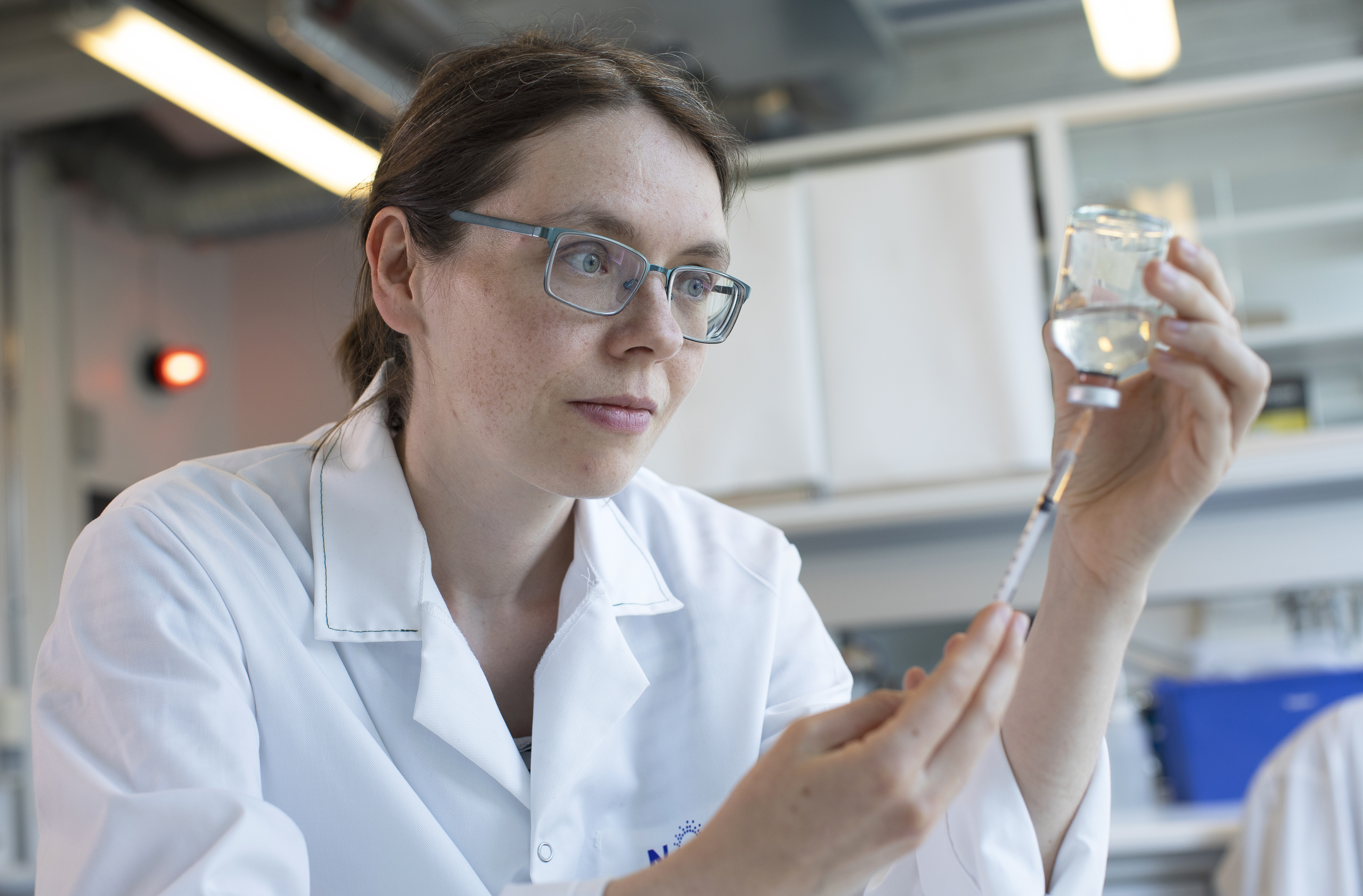
Nicole Dopffel at MORCE had the idea for the HyLife project and was excited to invite researchers she already knew across Europe to participate. Photo: Andreas R. Graven, NORCE
Found microorganisms
Dopffel says that the four involved research labs received more than 50 samples from different subsurface sites over the past two years. According to her, microorganisms were present in all the samples, but they were not necessarily active, meaning they did not consume hydrogen, at least under lab conditions. This kind of information can be very valuable to industry operators who want to store hydrogen underground.
«A major part of the work that the researchers in the consortium have done is to standardise the sampling procedure and the experimental set-ups and handling in the laboratories,» Dopffel says. This makes the results more meaningful and easier to compare and use. It also means that researchers and laboratories in different labs and countries can use the same procedures for their studies.
This is the first systematic attempt to assess the scope of the problem within potential storage sites in Europe.
The researchers in the consortium finished all the sampling work in 2025 and are now analysing the final samples and writing reports and papers about their findings.
«Major efforts will now be on building an open database where all the results of the analysis can be found and used freely. Hopefully the database will be out by autumn this year,» Dopffel explains.
Exciting work
Dopffel says the CETPartnership and the funding made available for research projects such as HyLife is «a really good scheme». She also considers it an advantage that each country in the consortium has its own budget. «That way the researchers do not fight over budgets but have their own funding. There is also less administration work for me as the coordinator,» Dopffel says.
The project will end this September, but Dopffel is not hopeful that a follow-up project will be possible. «Unfortunately, industry is more hesitant about hydrogen underground storage and supporting projects on this topic. » But for her and the researchers in the consortium, the project has already been a success and has yielded tangible results.
«I love the HyLife project. It is great fun. We have achieved an amazing output and created a good consortium,» Nicole Dopffel concludes.
About the project
The project is led by project coordinating partner Norwegian Research Center As, and the consortium also includes partners from France, Germany, the Netherlands and the Czech Republic.
Read more about the project here.